The Divx Fiasco
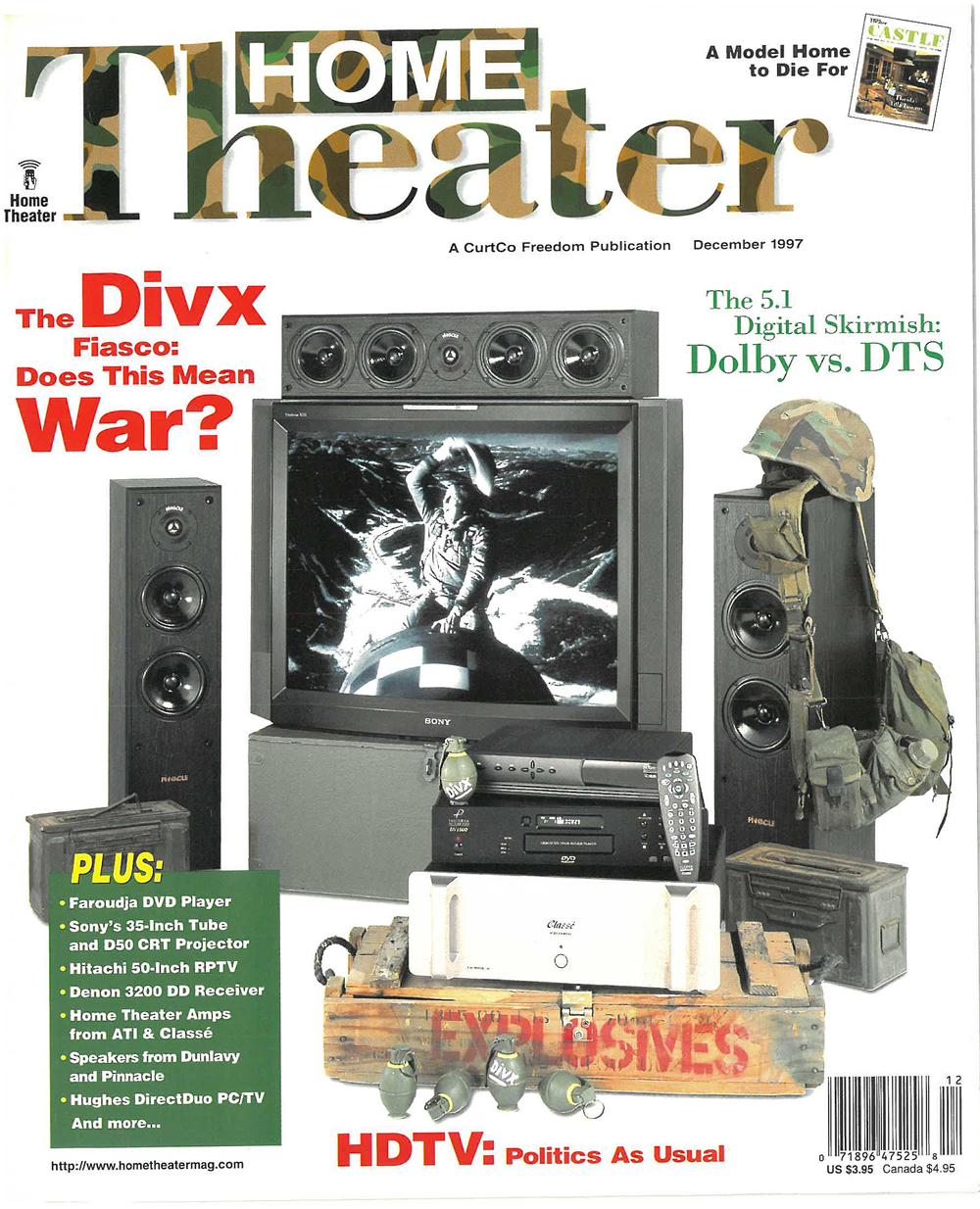
Home Theater, December 1997
In the fall of 1997, the consumer electronics industry was celebrating the launch of the DVD, the optical disc format that would replace VHS tape as the preferred medium for viewing movies at home and bring with it a huge jump in image and sound quality. Multiple manufacturers had fought but then hammered out which of the competing systems under development would come to market, so industry unity was thought to be a given as the PR machine geared up for the product’s first holiday selling season. In the midst of this, then mega-retailer Circuit City announced the pending release of a shadow DVD format called Digital Video Express or Divx—same technology, but with special discs that were locked unless played by a Divx player that was connected via modem to the internet and could charge the user’s credit card. In other words, the “open” DVD format (buy the disc once, play it forever) was suddenly being challenged by a pay-per-view alternate.
The announcement hit the CE world like a tsunami, pitting manufacturers like Sony and Toshiba against the industry’s largest and most powerful retail chain. Just as we were absorbing this news at Home Theater magazine, where I was senior editor, a loudspeaker manufacturer on a visit to demo his latest gear strolled into my office. “You know,” he said casually, “I happen to know the engineer who invented that system for them.” Cue the raised eyebrows. The source he directed me to readily admitted that he’d been hired to do the work by a big Hollywood entertainment law firm that was spearheading the project and acting at the behest of Disney and possibly other studios, with Circuit City as their partner.
I ended up writing two major articles on Divx. This first one delved into the origin of the system, examined how it worked, and studied the business ramifications if Divx succeeded. The second article, written a few months later when the first players hit the market in San Francisco, was a tongue-in-cheek shopping story. The irony, of course, is that although DVD and its successors Blu-ray and UHD (4K) Blu-ray remain open disc formats, with the advent years later of high-speed internet, Disney and the studios finally got what they’d always dreamed of: a live-stream ecosystem in which every viewing is tracked and paid for, either by subscription or individually.

