Digital Home Entertainment: TOC
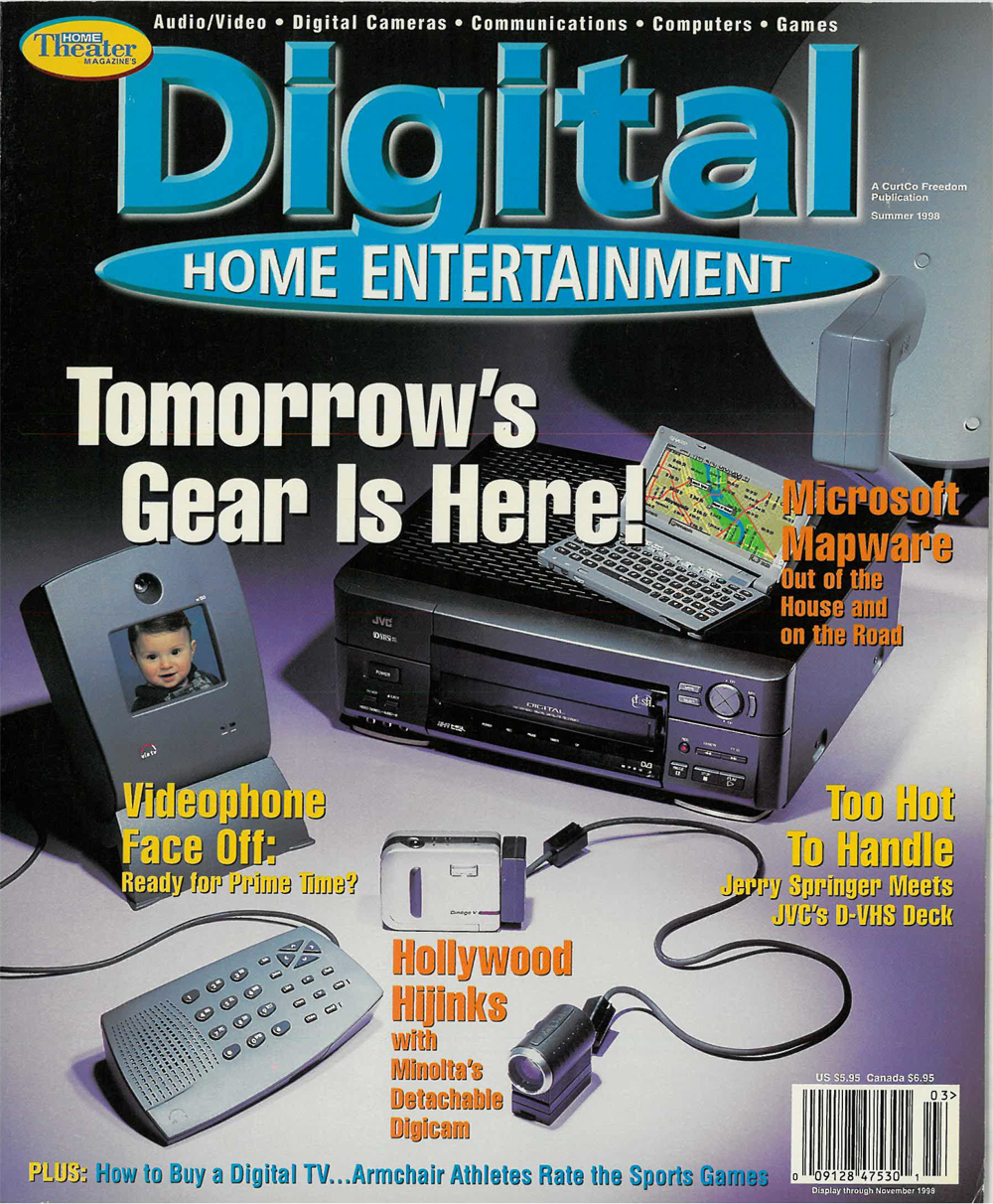
Inaugural Issue, Summer 1998
It’s rare for an editor to get a blank slate to create a new magazine from scratch, but this happened to me in the Spring of 1998. About a year earlier I’d been recruited from my senior editor post at Stereo Review to join Curtco Freedom Group, publisher of Home Theater magazine, to head up a sister publication called Audio/Video Shopper. It was short-lived; unbeknownst to me the magazine had been struggling for months, but management nonetheless brought me in to fill the hole left by EIC Peter Barry, who had moved into the leadership role at HT. Fortunately, they kept me on as senior editor at HT after AVS was cancelled three issues into my tenure. Eventually, they handed me the editorship of the quarterly Digital Home Entertainment, for which I had done some work as a house writer.
DHE had been conceived as a hybrid publication focused on the media landscape and home technology, but hadn’t found an audience. I was given free rein to reinvent it as a tech magazine, and after some thought settled on an equipment review publication with broad purview. I loosely modeled its tone and irreverent voice after the British laddie/gadget magazine T3, and determined to create a book where the only qualification for review products was that they either took batteries or got plugged into a wall. Beyond this, we would avoid at all costs the dry product reviews found in so many dedicated audiophile and PC magazines of the day, and teach people about the tech simply by letting loose with it.
After gathering my favorite freelancers in a conference room and kicking around ideas, I came up with a unique format in which each issue would have four primary sections focused on Home Theater, Personal Computing/Communications, Digital Photography, and Gaming. Anchoring each section was a feature review that involved someone going out and utilizing the product in an outlandish or entertaining way. The first issue, for example, had a review of a cutting-edge Digital-VHS tape deck in which our reviewer used it exclusively for recording the debauchery of Jerry Springer Show episodes. The digital camera we reviewed that issue had a detachable lens that could come off the body of the camera to be held aloft, so our LA-based reviewer ran around Hollywood with a map of the stars’ homes and tried to peek over fences with it, eventually landing at the red carpet for the 1998 Oscars. For our gaming review of the top sports titles, we locked five twenty-something guys in a New York City apartment with beer, pizza, and a Sony PlayStation and made them play all day. A recurring upfront section called “Digital Jungle” covered tech happenings with a wink, and our “Digerati” section offered short one-page reviews of exotic gadgets like a sports radar gun or an early self-cleaning litter box, which I wrote in the first-person voices of my two pet cats.
I was proud of the work we did and got good initial feedback, but I ended up leaving Curtco after putting out only two issues. With a growing family to support and no clear guarantee of job security, I was enticed by an attractive offer to return to Hachette Filipacchi to head up marketing for Sound & Vision, a new publication created from the merger of Stereo Review and Video. But doing DHE was a blast while it lasted, and a tremendous creative opportunity for which I remain grateful.
 robsabin.com